





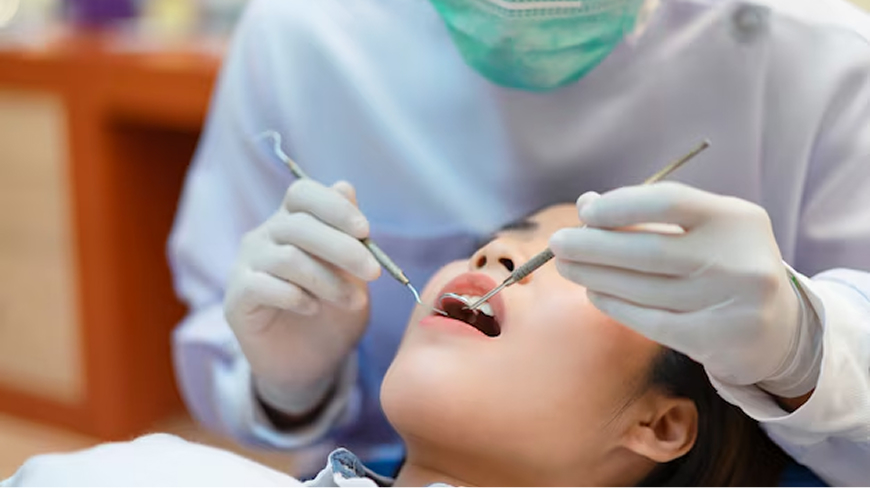
- Why do teeth turn yellow?
The reasons for endogenous nature are as follows:
Genetics: Innate physical problems.
Caused by taking drugs: In addition to the side effects of tetracycline introduced before, Ciprofloxacin, a broad-acting antibiotic, has also been reported by medical reports to be one of the causes of yellowing of teeth.
Fluorosis: This is also known as "dental fluorosis". Appropriate use of fluoride is helpful for dental health, but excessive fluoride can lead to enamel hypoplasia. The common cause is water quality.
Aging phenomenon: Tooth enamel will gradually be worn away with age. When the yellow dentin begins to thicken, the teeth will look and feel yellow.
Pulp necrosis: The pulp nerve in the tooth dies. At this time, the tooth may turn yellow, or even ooze pus in severe cases. You should seek medical treatment as soon as possible.
Caused by blood diseases: abnormal accumulation of heme, causing teeth to appear brown.
- Why do teeth turn yellowX external factors
Poor hygiene habits: Failure to develop good teeth cleaning habits will lead to the accumulation of dental plaque to form dental calculus over a long period of time, causing the necks of the teeth and the adjacent surfaces of the teeth to appear yellowish brown.
Eating habits: Tea, coffee, curry, cola and other beverages can easily leave pigments on the teeth, which can easily cause the teeth to turn yellow over time.
Lifestyle habits: Smoking and chewing betel nut. The lime contained in betel nut will lead to the formation of dental calculus in the mouth and damage to the dentin. The nicotine and tar in cigarettes can easily stick to the surface of teeth, causing tooth discoloration.
Long-term use of certain mouthwashes: Long-term use of certain mouthwashes, lasting for more than a few weeks or months, can easily lead to yellowish-brown staining or spots on the teeth.
- How to choose a teeth whitening method?
There are many causes of teeth turning yellow, and there are many ways to whiten teeth from yellow. Today I will introduce "teeth whitening methods" and what kind of situations are applicable.
Digital veneer: Based on the condition of the teeth in the oral cavity, a thin layer of the outer layer of the teeth is removed, and a porcelain chip is made to adhere to the surface of the teeth.
Sand blasting and whitening: Use medical-grade fine powder and a powerful wind spray that does not harm the dentin to remove the dirt covering the tooth surface. However, this type of physical treatment is only suitable for yellowing of teeth caused by "external factors."
Laser whitening: Apply a medical-grade whitening agent approved by the Department of Health to the surface of the teeth, and use a high-energy light source to improve the color of the teeth.
Home whitening: The doctor will make customized dental trays according to the condition of the patient's teeth, and give the patient a medical-grade whitening agent approved by the Department of Health. Since the dosage of the whitening agent is low, the patient can wear the dental tray at home and use it. After about 1-2 weeks, a return visit is required.
- Commercially available whitening agents
For commercially available whitening agents, the Ministry of Health and Welfare stipulates that the concentration of hydrogen peroxide should not exceed 6%. Hydrogen peroxide helps to lighten the color of teeth. The higher the concentration, the shorter the time required to whiten teeth. However, commercially available whitening agents may cause excessive damage to teeth if used casually for a long time. It is recommended to seek the assistance of a professional doctor.
Whitening agents approved by the Ministry of Health and Welfare are less likely to harm the nature of teeth when used within the safety instructions.
However, when used excessively, too many agents can penetrate and stimulate nerves, which can induce sensitive teeth and even gingivitis. It may also cause excessive damage to enamel, causing tooth decay to expand.
- whitening toothpaste
If they want to whiten their teeth without spending a lot of money, many people will choose affordable "whitening toothpaste". Today I will talk about the functions and ingredients of "whitening toothpaste".
Whitening toothpaste usually contains ingredients such as light agents, abrasives, slightly acidic substances, and peroxides. These ingredients can decompose pigment residues caused by food, drinks, etc., but are not helpful for tooth decay, nerve necrosis, and yellowing of teeth caused by tetracycline.
Moreover, whitening toothpaste can only help restore the color of teeth temporarily, but it cannot achieve the ideal whitening effect.
In order to achieve the polishing function, most whitening toothpastes contain shellfish limestone, sodium polyphosphate and other particles. Long-term use may cause damage to the teeth, so long-term use is not recommended.
- Dental Medical Grade WhiteningX Home Whitening
Home whitening: The doctor will make customized dental trays according to the condition of the patient's teeth, and give the patient a medical-grade whitening agent approved by the Department of Health. Since the dosage of the whitening agent is low, the patient can wear the dental tray at home and use it. After about 1-2 weeks, a return visit is required.
- Dental medical grade whitening
In the clinic, about 8 out of 10 patients will ask me about "cold light whitening". Starting this week, I will discuss a series of "cold light whitening".
Cold light whitening: Using high-concentration hydrogen peroxide (H2O2) whitening agent, combined with blue light irradiation, the teeth are oxidized and reduced to remove the pigment deposited in the teeth to achieve the function of teeth whitening.
When performing treatment, professional and qualified doctors will formulate a treatment plan based on the severity of the patient's tooth staining, tooth structure analysis, whitening machine type, whitening drug concentration, etc. Usually, the course of treatment will include 3-4 laser irradiations.
It is worth noting that due to the use of high-concentration whitening agents, it is necessary to find a professional and qualified doctor to perform the procedure. Otherwise, pain and sensitivity may easily occur after the procedure, which may even lead to nerve necrosis.
- What are the taboos of cold light whitening?
"Am I suitable for cold light whitening?", "What is the post-operative care of cold light whitening?" I will answer the questions in this article.
Before performing cold light whitening, a professional dentist will check the patient's oral health to make sure there are no cavities, periodontal disease and other problems. If there are cavities that have not been filled, direct whitening will make the original cavities expand, and the sensitivity and soreness after the operation will be more serious.
If periodontal disease is not treated well, the exposed tooth roots will be damaged, and in severe cases, nerve necrosis may occur.
At the same time, pregnant women and children are not suitable for cold light whitening.
- What are the postoperative precautions for cold light whitening?
Teeth will become more sensitive 24-48 hours after cold light whitening, because the whitening agent will open the tiny holes in the teeth, exposing the nerves and causing the teeth to become sensitive and soft after the procedure.
One week after surgery: In terms of diet, try to avoid foods that are too cold, too hot, and spicy foods.
One month after surgery: Foods that can easily cause pigmentation, such as coffee, tea, red wine, coffee, milk, soy sauce, etc., should be avoided as much as possible.
Daily care: In order to prevent teeth from turning yellow too quickly, in addition to avoiding foods that are prone to pigmentation, you should also avoid smoking, chewing betel nut and other behaviors.
- Cold light whitening VSporcelain veneers
Analyze the two most popular whitening methods "porcelain veneers" and "cold light whitening".
"Cold light whitening" has a shorter treatment time than "porcelain veneers", about 60-90 minutes each time. As for "porcelain veneers", since it is a customized treatment, it requires time to grind teeth and make dentures, so the treatment time and the number of follow-up visits are relatively long.
Compared with "cold light whitening", "porcelain veneers" can not only beautify teeth, but also change the size and shape of teeth, close gaps between teeth and fine-tune the bite. "Cold light whitening" uses a whitening agent paired with blue light, so it can only improve the color of teeth.
In terms of function and lifespan, "porcelain veneers" has a relatively long lifespan. If you maintain good oral hygiene and usage habits, it can be used for a lifetime. The average maintenance time of "cold light whitening" is about 1-2 years, which is shorter than that of "porcelain veneers".
"Cold light whitening" can be used again when teeth fade or turn yellow. If "porcelain veneers" has cracks, it cannot be repaired and the entire piece must be remade.
Although "cold light whitening" treatments can be repeated over and over again, if you do not find a professional dental aesthetician, use a machine from a major brand, use whitening gel that does not harm your teeth, and do not take good oral health care after the procedure, it will eventually cause irreversible damage to your teeth.
- What kind of whitening treatment is suitable for me?
In fact, no teeth whitening method is absolutely good or bad. You just have to choose the one that suits you. At the same time, you should seek the assistance of a professional doctor for any whitening treatment.
However, before teeth whitening, you can use several principles to help you test yourself.
Whether there are cavities or periodontal disease problems: If your teeth become sore when eating, or if your teeth shake when biting hard objects, or even if your mouth smells bad, it may be that you have cavities, periodontal disease and other problems. These symptoms must be eradicated before you can conduct an evaluation for teeth whitening.
Habits of smoking and chewing betel nut: If you want to whiten your teeth, you must also make up your mind to quit these habits, which will affect the effect of teeth whitening and the lifespan of your porcelain veneers.
Disease history: Those with severe oral cancer, gingival recession, exposed tooth roots, long-term gastroesophageal reflux disease, which has severely damaged tooth enamel, as well as pregnant women and breastfeeding mothers, are not suitable for teeth whitening.
Oral prostheses: The original dentures and prostheses in the oral cavity will not change their original color due to tooth whitening. In addition, and more importantly, before whitening treatment, the original dentures in the mouth must be confirmed to be free of cavities.
It must be emphasized again that if you want to know the teeth whitening treatment that is suitable for you, you must find a professional doctor with dental aesthetics for evaluation and discussion, so as to avoid blind whitening and cause greater damage to the teeth. ”
- Teeth Whitening: A Quick Guide
Q: Is teeth whitening covered by health insurance?
A: According to current regulations, if the treatment item is for whitening purposes, health insurance will not cover it.
Q: What are the methods of teeth whitening?
A: Digital porcelain veneers, sandblasting whitening, medical home whitening, medical cold light whitening, etc.
Q: Which whitening method is suitable for me?
A: Professional doctors will give appropriate treatment suggestions based on the structural condition of the patient's teeth in the mouth, the cause of the yellowing of the teeth, and the appearance of the teeth.
Q: How to find suitable treatment methods and doctors?
A: In terms of treatment settings, treatment should be carried out in a clinic with a qualified dental license. You can also look for a doctor who has received professional certification in dental restoration and aesthetics in the doctor profile.
Q: What should I pay attention to before teeth whitening surgery?
A: Both tooth decay and periodontal disease must be treated to ensure that the oral cavity remains in a healthy state.
Q: What precautions should I take after teeth whitening?
A: After every whitening treatment, your teeth will become more or less sensitive. You should try to avoid cold and hot foods, as well as spicy and irritating foods.
Q: If I have cavities or cavities that are being treated, can I do teeth whitening?
A: No, if it is a cavity problem, the cavity must be filled first. If it is a periodontal problem, radical treatment must be completed to ensure that the oral cavity is in a healthy state before teeth whitening can be performed.
Q: If I have missing teeth, can I do teeth whitening?
A: A professional dentist will make an overall assessment based on the overall condition of the patient's oral cavity and whether the missing teeth are inflamed.
Q: What should I do if porcelain veneers has tooth decay?
A: If there is tooth decay, the doctor will evaluate the location of the tooth decay and decide whether to remove the patch. If the patch must be removed, the original patch cannot be used, and a new impression must be made to make a new patch.
Q: If there are prostheses or repairs in the mouth, will they be affected after whitening?
A: Prostheses and prostheses will not change their original color due to whitening treatments. Doctors usually recommend teeth whitening first and wait for about 1 month to allow the color of the teeth to stabilize before doing dental implants to make the overall color of the teeth more similar.
Q: Are the teeth whitening products on the market really effective?
A: Commercially available teeth whitening products can only achieve short-term whitening effects. If you want long-term whitening effects, you must use porcelain veneers.
Q: If you really want to use whitening products on the market, what should you pay attention to?
A: Check the source and label of the product clearly to confirm whether it is a product approved and certified by the Food and Drug Administration of the Ministry of Health and Welfare. At the same time, make sure that the whitening agent on the label is in compliance with the regulations.
Q: After taking porcelain veneers, can I still use whitening products on the market?
A: It is usually recommended not to use it to avoid substandard products and damage to the patch. If you really want to use it, it must be evaluated by a doctor.
Q: If I want to do permanent teeth whitening, what methods can I choose?
A: porcelain veneers is a permanent teeth whitening, but the premise is that you must maintain good oral habits after the operation and avoid eating a lot of foods that are easy to stain.
Q: If teeth whitening is not done well, what kind of oral problems will it cause?
A: It will cause damage to tooth enamel, breakage of teeth, and possibly nerve necrosis in severe cases.
- Digital Smile Patch X Process Introduction
Consultation, inspection and photography→Digital smile curve design DSD→Preview simulated smile→Design finalization→Customized patch production→Installation of patches
Step 1: Consultation and examination: The doctor will take a full range of photos of the face and mouth according to the patient's needs, and use a mouth scanner to simulate a smile.
Step 2: Digital smile curve design: Use the collected data to conduct image analysis using DSD to find the proportions of the oral teeth, find a suitable aspect ratio, and a color that is similar to the teeth.
Step 3: The doctor and patient "preview the simulated smile" together.
Step 4: Finalize the perfect smile: After discussing with the patient, the details such as tooth size, appearance, color presentation, etc. will be modified according to the patient’s needs and then finalized.
Step 5: Customized patch production: The dental technician will design a customized patch based on the discussion between the doctor and the patient.
Step 6: Patch try-on and adhesion: Before actual adhesion, the doctor will try on the patch to confirm whether it meets the patient's needs, and make final fine-tuning. Only when everything is agreed upon, can the patch be adhered.
- Digital Smile Patch X Preoperative and Postoperative Precautions
porcelain veneers "Preoperative":
Needs and ideas should be clearly expressed to the doctor.
Pregnant women, patients with rare diseases, and serious diseases should clearly inform their doctors about their disease history. Because some patients are not suitable for this type of examination.
porcelain veneers "After surgery":
Installation completed: After the patch is installed, it is recommended to wait at least 30 minutes before eating.
Avoid eating stained foods: In order to reduce the occurrence of uneven tooth color, coffee, tea, curry and other easily stained foods or drinks should be avoided for one week after surgery.
Avoid hard food: Although porcelain veneers is highly wear-resistant, excessive external force may still cause brittleness. It’s not that you can’t eat it, but don’t deliberately bite hard food.
Keep your mouth clean: porcelain veneers does not require deliberate care. Normal and correct tooth cleaning methods, the use of dental floss, good cleaning habits, and follow-up follow-up time agreed with the doctor can increase the service life of the patch.
Does Digital Smile Patch X require grinding a lot of teeth?
"Do teeth need to be ground down?", "Why do teeth need to be ground down?", "How many teeth need to be ground down?" This is the first question many patients ask when consulting.
"Do I need to grind my teeth?", "Why do I need to grind my teeth?": Only a very small number of people do not need to grind their teeth. Most of them need to grind their teeth when installing porcelain veneers. The purpose of grinding their teeth is to remove the unsightly parts of the surface and find a surface that is close to the patch.
"How many teeth need to be polished?": The thickness of tooth polishing needs to be evaluated by a professional doctor. Based on the patient's dental condition, the doctor will use a special dental microscope to grind off a thin layer of the tooth's surface. Usually the thickness will fall within 0.02-0.03mm.
What will happen if I don’t grind my teeth with Digital Smile PatchX?
For teeth that have not been polished and veneers are attached, the most common problems are "protruding teeth" or the inability to close the lips. Why?
Try to picture it in your mind. Your teeth are glued to something that has not been sculpted. When you close your mouth, you feel the protrusions in the gums and gums.
Over time, not only will it cause tooth decay, but it may also cause sequelae such as tooth decay, gum inflammation, and periodontitis because the shape of the patch does not conform to the tooth shape.
Will Digital Smile PatchX teeth never become discolored?
"Will it never change color if you put it on?" I spent money on porcelain veneers in the hope that it could solve the problem of yellowing teeth once and for all. After the patch was completed, this sentence became the most frequently asked question by patients.
In fact, the lifespan of porcelain veneers not only depends on the brand and quality of the all-ceramic material and the doctor's skills, but more importantly, the patient's living habits.
If you are a heavy smoker, a betel nut eater, or a person who likes to drink coffee, tea, curry and other easily stainable foods, your risk of discoloration will be much higher than that of the average person.
Basically, as long as you brush your teeth correctly, maintain good oral habits, and go back for regular check-ups, the chance of porcelain veneers discoloration will be relatively small.
Will Digital Smile PatchX make teeth sensitive?
"The veneer requires teeth grinding. Will it cause tooth sensitivity after completion?" If the tooth decay repair before the veneer grinding is close to the tooth nerve, it will also cause postoperative sensitivity.
In addition, the material used by the doctor is not close enough to the patch made, which is also one of the reasons.
porcelain veneers, made by professional doctors, is customized according to the patient's dental condition. The enamel of the tooth has a certain thickness that can be polished. When the doctor performs the polishing, he uses a high-magnification microscope specially designed for dentists to polish the enamel of the tooth in a thin layer, so as not to damage the dentin of the tooth.
In the 1-2 days after porcelain veneers surgery, the problem of sensitivity to cold and heat usually occurs. This is normal. The lasting condition varies from person to person. Usually the condition will slowly disappear in the future. During this period, it is recommended to eat less food with a large difference between hot and cold. ”
Will the smile become unnatural with the Digital Smile Patch?
As long as things are beautiful, everyone hopes to be "naturally beautiful." No one wants to open a mouth and know that it is "made" at a glance, and the same goes for porcelain veneers.
porcelain veneers The key to making your smile appear natural and not whitening lies in the medical materials used and the communication between the professional and qualified physician team and the patient.
When making porcelain veneers, the medical team composed of a professional team will fully collect the oral conditions of the patient, fully understand the patient's thoughts, and provide professional suggestions to create a customized smile that meets the patient's expectations.
Finally, high-quality porcelain blocks from European and American brands are used, and the color that best suits the patient's teeth is selected. The ideas and design are accurately conveyed to the dental technician to create a customized porcelain veneers.
After a series of rigorous communication and production, the smile curve appears natural and not white.
Digital Smile Patch X will never cause cavities?
"Will there be no tooth decay after applying the veneer?" Many patients think that there will be no tooth decay after the veneer is applied. I will explain whether this concept is correct starting today.
"Will tooth decay be prevented by wearing a patch?" This is absolutely wrong!
In addition to being aesthetically pleasing, veneers can also be a good treatment for repairing tooth decay.
First, before taking an impression, the doctor will help the patient completely remove the tooth decay problem, make sure there is no remaining tooth decay before sticking the veneer, and perform periodontal treatment to prevent future periodontal disease.
Next, after the patch is completed, it does not mean that there will never be tooth decay. If you have poor oral habits and do not have good teeth cleaning habits, it will not only cause secondary tooth decay, but also shorten the life of the patch, and even cause damage to the patch.
Digital Smile Patch
Doctors usually require patients to undergo regular examinations every 3-6 months. During the examination, the doctor will observe whether there is inflammation around the gums and whether there are signs of tooth decay in the gaps between the teeth and the veneers. At the same time, the doctor will use X-rays to confirm whether there are any signs of tooth decay in the small gaps between the teeth.
If there is tooth decay, the doctor may look at the location of the tooth decay and decide whether to remove the patch to deal with the problem of tooth decay and periodontal disease.
After the veneer is removed and the tooth is treated, the original veneer can no longer be used, and a new impression must be taken and a new veneer must be made.
Digital Smile Patch
In shops or professional treatment clinics, there are various materials for patch selection. Today I will introduce the two most common ones, "porcelain veneers" (All Ceramic Veneers) and "Resin Veneers" (Composite Resin Veneers).
porcelain veneers: It is a patch made of strengthened glass ceramic, with a thickness of about 0.3mm~0.7mm. Since it is made of all-ceramic material, it does not contain metal components and has high biocompatibility. It is not only stable in structure and strong in strength, but also can be strongly attached to the teeth after acid etching and will not fall off easily. Also because of the fine molecular crystallization, it is not prone to staining and staining problems after long-term use.
Resin veneers: Resin is mostly used in dental fillings. In recent years, it has been used in dental beauty. However, there are conditional restrictions on using resin as veneers. In addition to the specific resin, it must also go through multiple rigorous procedures in terms of sculpting and design to achieve the function of mimicking natural teeth. Long-term use is prone to staining and dirt sticking problems.
Resin patch VSporcelain veneers
Comparison of the differences, advantages and disadvantages between "resin patch" and "porcelain veneers".
In recent years, resin veneers have been widely used in "cosmetic tooth engraving", "tooth engraving", "ultra-thin whitening patches", etc. Although the emphasis is on "not grinding teeth" and "not damaging tooth structure", the indications are quite limited and are not suitable for everyone. Coupled with the limitations of the materials used, long-term use will easily cause staining and staining problems. Not only does it not achieve the ideal appearance, it also causes damage to the teeth.
But the resin patch is not so heinous, because before porcelain veneers appeared, the material of resin was relatively elastic, and doctors with mature experience, skills and aesthetics could use it to function as a patch.
Nowadays, there are many consumer disputes in the public, or patients with periodontal problems come to the clinic. Most of them are caused by not seeking professional doctors for evaluation when performing teeth whitening.
porcelain veneers is a patch made of porcelain blocks or glass ceramics, with a thickness of about 0.3mm~0.7mm.
The lifespan and quality of the patch not only depend on the skill of the doctor, but also the manufacturer of the material source is very important. Material sources with stable quality will undergo professional toxicity testing to reduce the possibility of harm to the human body, achieve stable quality, and increase the lifespan of the patch.
Professional doctors will choose large brands with excellent international reputation, such as Ivoclar Vivadent, Dentsply Sirona, Vita and other brands. They have a large amount of scientific literature and clinical experience to support their use, allowing doctors and patients to feel more confident in their use.
If you want to use whitening patches, you must find a professional doctor for evaluation and understand the source of the materials. Only then can you have a new smile and a new life.
Why do inlays
"Inlay/Crown": Both are new technologies in dental restoration in recent years, which help to retain more tooth substance. They are most commonly used to repair large areas of cavities, partially fractured crowns, or severely worn back teeth. Depending on the size of the tooth defect, the dentist will determine the treatment method.
Traditional inlay materials are gold alloy, composite resin and other materials that are less beautiful and have weak strength and wear resistance. At present, the inlay material of new digital dentistry is nanofiber-reinforced ceramic, and the material is even incorporated with zirconium dioxide particles to greatly increase the hardness and achieve a beautiful and translucent effect.
When to do inlays/crowns
When the area of tooth decay exceeds 1/3, or when tooth decay occurs on the adjacent surface between teeth and the tooth wall is damaged in a large area, if ordinary resin materials are used to fill it, the filling may fall off or be damaged due to insufficient material stability, shrinkage and deformation.
In addition, the surface of resin is rougher than that of permanent materials and is not easy to see and smooth. When used as a material for the adjacent surfaces of teeth, it often happens that the filling cannot be tightly combined with the adjacent surfaces, and it is rough and difficult to clean, which will also shorten the life of the filling.
When the fillings are cracked or even fall off the teeth, and the patient fails to detect them in time through regular check-ups, bacteria will have an opportunity to take advantage of them, leading to secondary tooth decay.
Advantages of Kanti
The advantages of using cassettes to repair teeth are:
-High biocompatibility
-Beautiful and functional
-Can form close contact with adjacent surfaces and have high edge adhesion
-Expansion or contraction caused by temperature, resulting in tooth decay and secondary tooth decay.
-Can simulate the bite relationship with a high degree, reducing the foreign body sensation in the patient’s bite
The material of the body
Common inlays medical materials include: gold alloy inlays, composite resins, nanofiber reinforced ceramics, etc.
Gold and gold body: traditional repair materials, with high strength casting and reshaping capabilities, good ductility and mechanical properties, good density performance, and biocompatibility. Because it is a gold alloy, the damage rate is low.
However, in terms of aesthetics, the color is not the color of natural teeth, and there is an obvious golden color, so the aesthetics are poor. It is usually suitable for the treatment of the posterior area of the upper jaw.
Composite resin: A new type of composite resin. The filler is as fine as micron nanometers (nm), and reinforced substances are added to improve the strength, durability and shrinkage characteristics of traditional resins. Binding agents are constantly being developed, which can penetrate into the tiny tubes on the surface of teeth and tightly combine with the dentin, thereby greatly improving the performance of restoring tooth function, beauty, and durability.
Although the new composite resin has been improved, its strength is still weak, and it may break if it bears heavy gravity for a long time. Due to the inherent limitation of material shrinkage, this material may not be suitable for teeth with extensive decay and missing teeth.
In addition, composite resin has problems such as aging, discoloration, and wear. Therefore, when selecting, a professional dentist must evaluate whether it is suitable for use.
Reinforced ceramic body is a "patch" that has been highly discussed in recent years, and has even been extended to many new terms. Common ones include: porcelain body, 3D tooth carving, all-ceramic body, etc.
Reinforced ceramic monomer: Excellent performance in hardness and stability, and extremely biocompatible. It is mainly composed of reinforced glass ceramics and is an integrally formed medical material. The strength is greatly improved compared with traditional porcelain, and it can bond with teeth and is not easy to fall off. It has strong hardness and wear resistance, and is less likely to cause excessive wear of the material due to wear caused by chewing.
Kanti X enhances the aesthetics of ceramics
For the application of glass based ceramics, the doctor will first use the "digital impression" method of an intra-oral scanner to accurately obtain the range and size of the patient's oral defect, and then send it to the dental technician. After receiving the scanned file data provided by the doctor, the dental technician will use digital software (CAD) to simulate the design of the prosthesis to confirm that it meets the needs of the patient's oral cavity, and then use a medical-grade grinding machine (CAM) to produce the prosthesis.
After the doctor receives the prosthesis made by the dental technician, he uses a special nano-adhesive method to replace the prosthesis into the tooth defect. Because reinforced ceramics do not contain any metal components and have high light transmittance, the color is very flexible in terms of brightness, saturation and hue. It can be compared to natural tooth texture and has very good strength and hardness. Currently, it is an epoch-making choice in the new digital dental treatment.
Ceramic Inlays and Onlays: A Quick Guide
Q: What are the common materials for inlays?
A: Gold alloy, composite resin, glass reinforcement ceramics.
Q: What are the characteristics of these materials?
A:-Gold and gold: traditional repair materials, which are gold alloys and have high biocompatibility.
- Composite resin: A new type of composite resin that improves the strength, durability and shrinkage characteristics of traditional resins. It is as detailed as micro-nano (nm). The binding agent (binding agent) is constantly introduced, which can penetrate into the tiny tubes on the surface of the tooth and tightly combine with the dentin.
-Glass based ceramics: Mainly composed of reinforced glass ceramics, they are integrated medical materials. With the new digital dental process, the strength is significantly improved compared to traditional porcelain.
Q: What are the advantages of these materials?
A:-Gold and gold: have high strength casting and reshaping capabilities, good ductility and mechanical properties, good density performance, low damage rate, and biocompatibility.
-Composite resin: New type of composite resin, which greatly improves tooth function and aesthetics.
-Glass based ceramics: have excellent performance in hardness and stability, and have extremely high biocompatibility, strong hardness and abrasion resistance, and will not cause excessive wear and tear of the material due to chewing. Since reinforced ceramics do not contain any metal components and have high light transmittance, the color rendering is quite flexible in terms of brightness, saturation and hue, and can be compared to natural tooth texture.
Q:What are the disadvantages of these materials?
A: - Gold and gold: In terms of appearance, the color is not the color of natural teeth, and there will be an obvious gold color, so the aesthetics is poor. It is usually suitable for the treatment of the posterior area of the upper jaw.
-Composite resin: If it is subjected to heavy gravity for a long time, it may break. Due to the inherent limitation of material shrinkage, this material may not be suitable for teeth with extensive decay and missing teeth.
In addition, composite resin has problems such as aging, discoloration, and wear. Therefore, when selecting, a professional dentist must evaluate whether it is suitable for use.